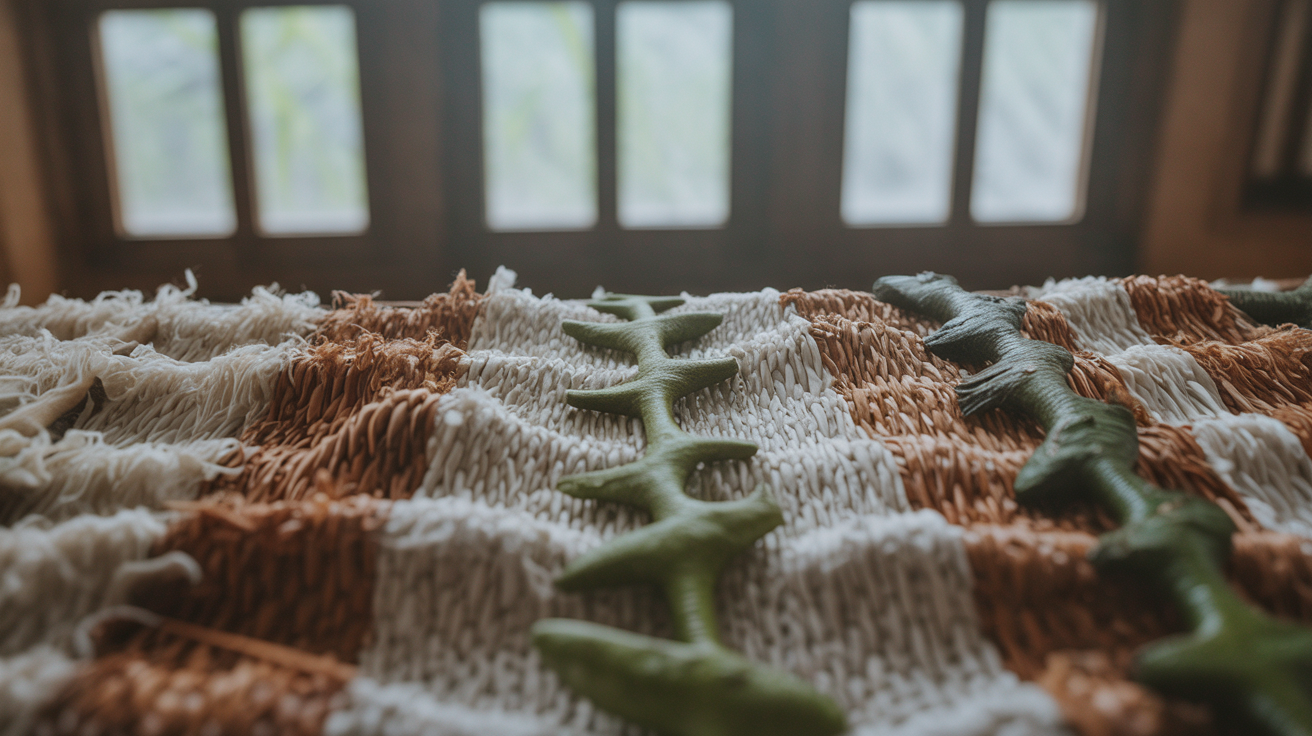
Before cotton and silk arrived in Hawaiʻi, before looms and spinning wheels, there was kapa—bark cloth beaten from the inner bark of the wauke (paper mulberry) tree. Hawaiian kapa cloth wasn't just fabric. It was ceremony, status, protection. Birth, marriage, death—kapa wrapped every threshold. Chiefs wore kapa so fine it rivaled Chinese silk. Commoners slept under thick kapa blankets that shed rain like modern tarps.
For generations after Western contact, kapa making faded. Cotton was easier. Machines were faster. The knowledge didn't disappear entirely—it lived in museum collections, in the hands of a few dedicated practitioners, in stories passed down—but the daily practice, the rhythm of beating bark into cloth, grew quiet.
Today, on the North Shore and across the islands, a new generation of artists is reviving traditional kapa making. They're not recreating museum pieces. They're breathing new life into an ancient art form, connecting traditional Hawaiian textile art with contemporary design while honoring the cultural knowledge that makes kapa sacred.
What is Kapa? Understanding Hawaiian Bark Cloth
Kapa is bark cloth, made by stripping, soaking, and beating the inner bark of specific trees until it becomes fabric. In Hawaiʻi, the primary source was wauke (paper mulberry, Broussonetia papyrifera), though ʻulu (breadfruit) and māmaki bark were also used for specific purposes.
The Hawaiian word "kapa" is related to "tapa," the term used throughout Polynesia for bark cloth. But Hawaiian kapa developed its own distinct traditions—unique beating techniques, watermark patterns stamped into the cloth, natural dyes that created colors from soft yellows to deep blacks.
Unlike woven textiles, kapa isn't made on a loom. There are no threads, no weaving. Instead, strips of bark are laid perpendicular to each other and beaten together until they fuse into a single piece of cloth. The beating itself—thousands of rhythmic strikes with a wooden beater called an iʻe kuku—creates the fabric's strength and character.
The process is labor-intensive. A single large piece of kapa might take weeks to complete. But the result is unlike anything else: soft yet strong, breathable, with a subtle texture that holds dye beautifully. Fine kapa could be as thin as silk. Thick kapa could be nearly waterproof.
Kapa wasn't casual clothing. Chiefs and aliʻi wore kapa that signaled rank and lineage. Specific patterns and colors indicated status. Kapa served ceremonial purposes—wrapping newborns, clothing the deceased, marking sacred spaces. In pre-contact Hawaiʻi, kapa was wealth. The ability to make fine kapa was a respected skill, passed down through generations of practitioners who spent years perfecting their technique.
Traditional Kapa Making Process: From Tree to Cloth
The kapa making process begins with wauke cultivation. The paper mulberry tree grows quickly, ready to harvest in about a year. Farmers cut young branches, leaving the root system to regenerate—sustainable harvesting practiced for generations.
Once harvested, the outer bark is stripped away to reveal the white inner bark, the prized material for kapa. This inner bark is scraped clean, then soaked in fresh water for several days to soften the fibers and make them pliable.
After soaking comes the beating. Strips of softened bark are laid on a wooden anvil called a kua kuku. The kapa maker uses an iʻe kuku—a square wooden beater with grooves carved into each of its four sides—to pound the bark. Each side of the beater has different groove patterns, used in sequence from coarse to fine.
The beating serves multiple purposes. It breaks down the bark's cellular structure, allowing fibers to spread and mat together. It thins the material. It creates texture. The rhythmic sound of kapa beating—"kuku kapa"—once filled Hawaiian villages, multiple artisans working in sync.
As strips are beaten, they're overlapped and pounded together, creating larger and larger pieces. Fine kapa might be beaten multiple times, with periods of drying between sessions. The process requires both strength and sensitivity—too much force tears the bark, too little leaves it thick and uneven.
Once the base cloth is complete, dyeing begins. Traditional kapa makers used natural dyes: ʻōlena (turmeric) for yellow, kukui bark for black, ʻākala (Hawaiian raspberry) for red. These weren't simply colors. They were connections to the land, to specific plants and their properties, to the knowledge of which season and which soil produced the strongest pigments.
Patterns, Symbolism, and Cultural Significance
Kapa patterns weren't decorative accidents. They carried meaning, told stories, marked identity.
Some patterns were created through watermarking—carving designs into the wooden anvil so that when bark was beaten against it, the pattern transferred into the cloth itself. These watermarks were subtle, visible only when light hit the kapa at certain angles, like ghosts of meaning woven into the fabric.
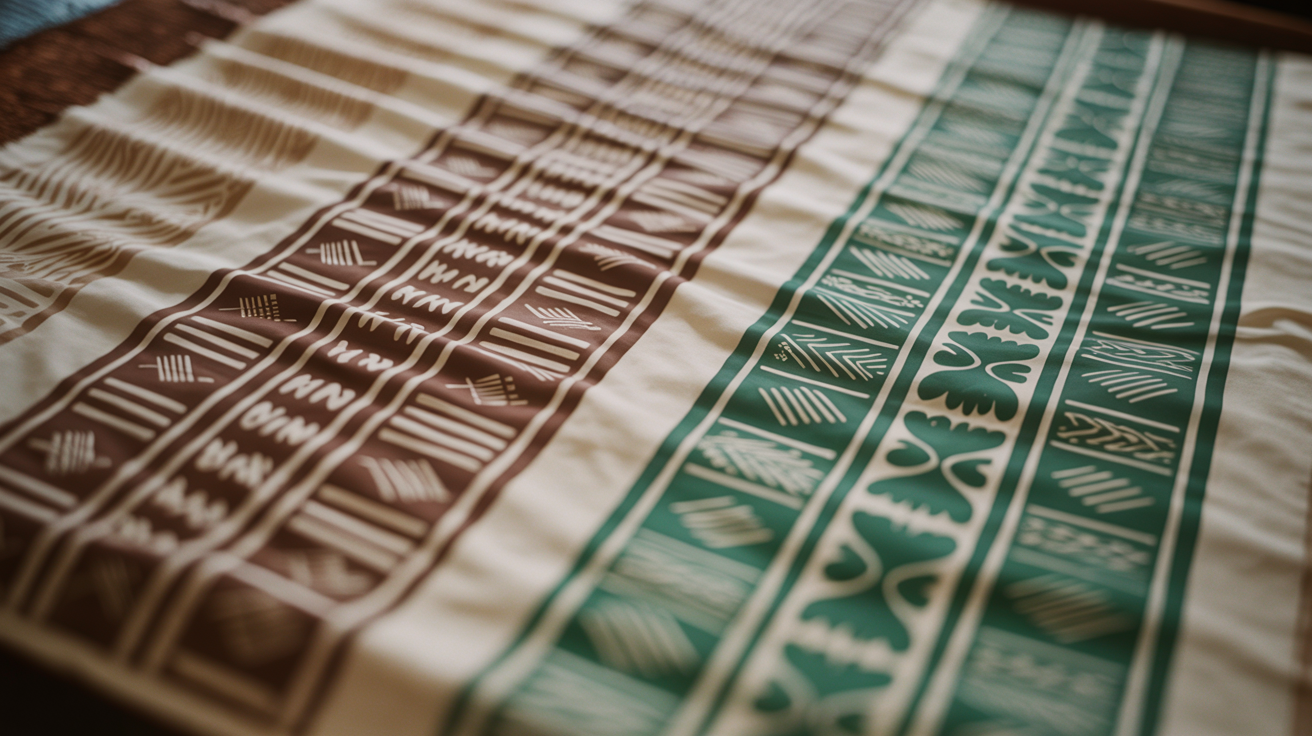
Other patterns were painted or printed after the cloth was made. Bamboo stamps carved with geometric designs created repeating motifs. Freehand painting added color and complexity. The most skilled kapa makers developed signature patterns recognized across the islands.
Certain designs belonged to specific families or regions. Aliʻi lineages had patterns that couldn't be used by commoners. Some kapa was reserved for religious ceremony—kapa that clothed images of gods, kapa that marked temple boundaries.
Color carried significance too. Red kapa (kapa ʻulaʻula) was associated with chiefs and sacred status. Yellow kapa connected to sunlight and royalty. Black kapa, dyed with kukui soot mixed with kukui oil, produced deep, rich tones used for contrast and emphasis.
The cultural knowledge embedded in kapa extended beyond technique. Making kapa required relationship with land—knowing which trees to plant, when to harvest, which plants provided which dyes. It required understanding moon phases, seasons, proper protocols for working with sacred materials. Kapa making was ecological knowledge, spiritual practice, and artistic expression woven together into cloth.
Modern Kapa Artists Reviving the Tradition
Today, Hawaiian kapa makers are reclaiming this art form, drawing on museum collections, oral histories, and years of dedicated experimentation to understand how their ancestors worked.
These contemporary practitioners aren't simply recreating historical kapa. They're innovating while honoring tradition—experimenting with new pattern combinations, exploring how traditional techniques can speak to modern themes, teaching workshops so the knowledge spreads beyond a handful of specialists.
Some artists focus on traditional methods exclusively, growing their own wauke, harvesting bark by hand, using only natural dyes from native plants. Others blend traditional kapa making with contemporary materials, creating hybrid pieces that honor the past while addressing present concerns about sustainability and cultural continuity.
On the North Shore, you'll find artists incorporating kapa patterns into their work even if they're not making bark cloth themselves. The geometric designs that once marked fine kapa now appear in paintings, carvings, digital art. Just as the North Shore artist collective draws on ocean traditions, many creators find inspiration in kapa's visual language.
The revival isn't without challenges. Wauke isn't widely cultivated commercially. Natural dyes require extensive knowledge to prepare properly. The physical demands of beating bark for hours test even strong arms. But the artists persist, driven by the understanding that kapa isn't just about making cloth—it's about maintaining cultural continuity, keeping ancestral knowledge alive in hands and memory.
Where to See Kapa Art on the North Shore
While kapa making demonstrations aren't daily occurrences on the North Shore, opportunities exist for those interested in this art form.
The Bishop Museum in Honolulu holds one of the world's most extensive kapa collections, with pieces dating back centuries. Their exhibits showcase the incredible variety of patterns, techniques, and regional styles developed across Hawaiʻi and the Pacific.
Occasionally, cultural festivals and events on Oʻahu feature kapa makers demonstrating traditional techniques. The timing varies, but checking community calendars—especially around cultural celebration months—can reveal opportunities to see artists at work.
Some North Shore galleries feature contemporary Hawaiian art that incorporates kapa patterns or explores themes related to traditional textiles. Haleʻiwa Art Gallery and other local spaces sometimes showcase work inspired by kapa aesthetics.
For those interested in the natural dyes used in traditional kapa, the connection to plants growing wild on the North Shore becomes clear. The same ʻōlena (turmeric) we explored in our article on traditional Hawaiian medicinal plants produces the golden yellows in kapa dyeing. Walking North Shore beaches and trails with awareness of these plant relationships deepens appreciation for how kapa connects art, land, and traditional knowledge.