Walk past a noni tree on the North Shore, and you'll know it before you see it. The smell arrives first—a pungent, fermented odor that locals describe as "cheese meets feet meets something died." Tourists wrinkle their noses and hurry past. But Hawaiian kupuna (elders) recognize that smell as medicine. For over a thousand years, noni fruit benefits in Hawaii have been central to traditional healing practices, earning Morinda citrifolia the nickname "stinkfruit"—a term of endearment, not insult. What science is only now beginning to validate, Hawaiian healers have always known: the worse it smells, the better it works. From ancient lāʻau lapaʻau (traditional medicine) to modern wellness shelves, noni remains one of the most powerful and misunderstood Hawaiian medicinal plants growing along North Shore beaches and backyards.
What Is Noni? The Stinkfruit That Heals
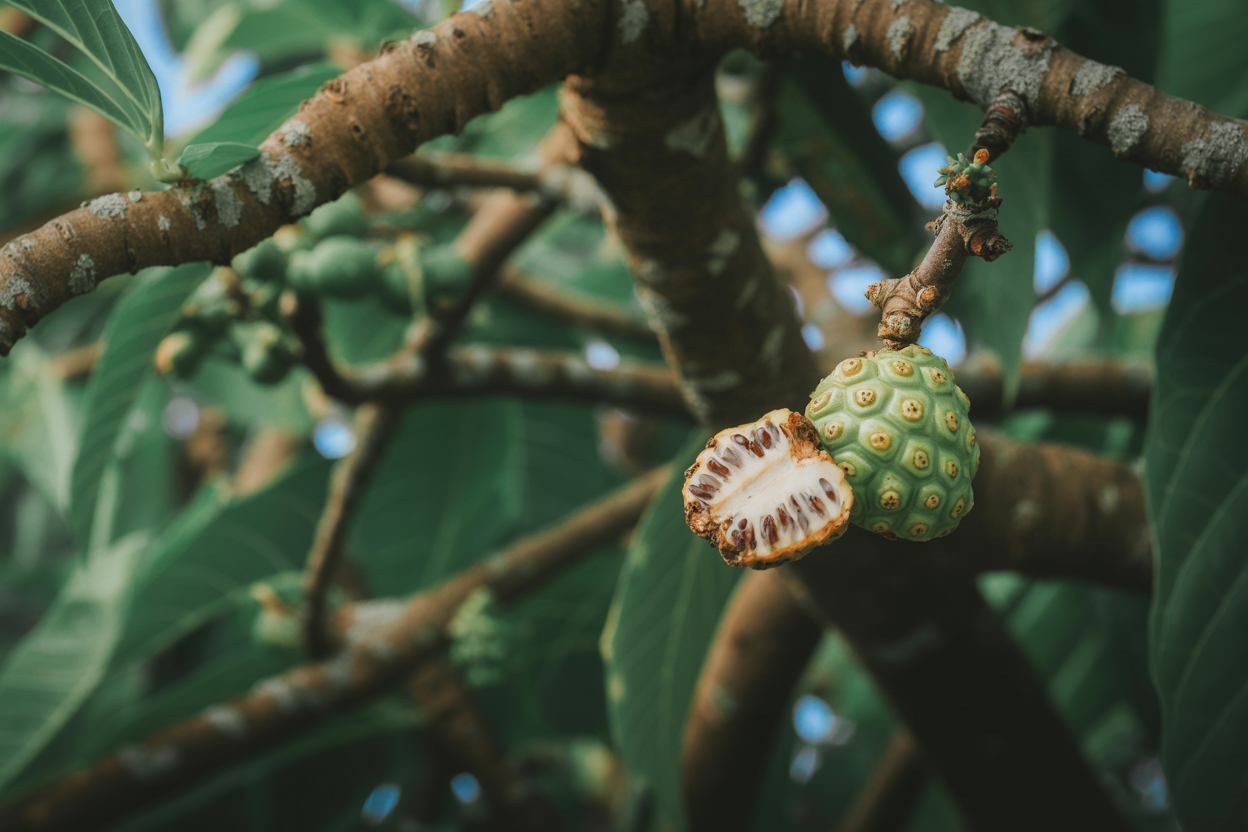
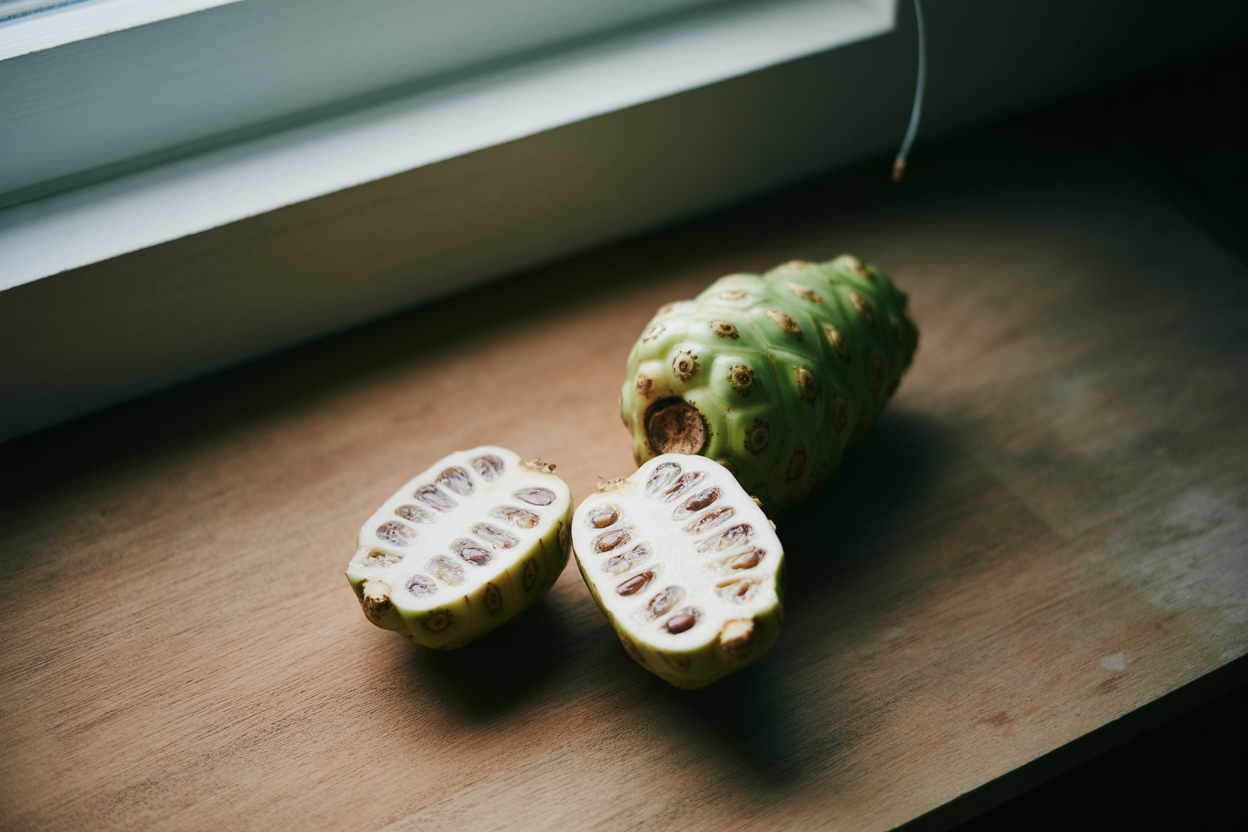
Noni (Morinda citrifolia) is a small evergreen tree that grows throughout Polynesia, Southeast Asia, and Australia. In Hawaiʻi, it thrives from sea level to 1,000 feet, preferring coastal areas, lava rock, and disturbed ground. The tree produces lumpy, greenish-white fruit year-round—each about the size of a potato, covered in polygonal segments that give it a warty, alien appearance.
The smell comes from the ripening process. As noni fruit ferments on the tree, it releases compounds including butyric acid and octanoic acid—the same chemicals responsible for the smell of rancid butter and vomit. It's an evolutionary strategy: the stench attracts fruit bats and other animals that spread the seeds. But it also signals readiness. Traditional Hawaiian healers knew that peak ripeness—when the fruit turned translucent yellow-white and nearly fell from the tree—was when medicinal potency peaked.
Early Polynesian voyagers brought noni on their canoes as essential cargo, ranking it alongside taro, breadfruit, and sweet potato. They didn't pack it for food. They packed it as their medicine chest. On long ocean passages where infection, injury, or illness could mean death, noni was insurance. The entire plant served medicinal purposes: fruit, leaves, roots, bark, and flowers. Nothing was wasted.
Traditional Hawaiian Uses: Lāʻau Lapaʻau
In traditional Hawaiian medicine, noni was considered a kinolau—a physical manifestation—of Kanaloa, the god of the ocean and healing. This spiritual connection elevated noni beyond mere plant to sacred medicine, used with prayer and intention by kahuna lāʻau lapaʻau (healing practitioners).
The applications were extensive. Ripened fruit was mashed and applied directly to wounds, burns, and skin infections for its antibacterial properties. The juice was consumed for digestive issues, diabetes symptoms (before Western contact introduced the term), and general vitality. Leaves were heated and applied as poultices for headaches, inflammation, and muscle pain. Root preparations treated urinary problems. Bark tea addressed oral infections and sore throats.
What's remarkable about traditional use isn't just the variety—it's the precision. Hawaiian healers understood that different parts of the plant, prepared different ways, treated different conditions. Fresh fruit for external wounds. Fermented juice for internal ailments. Young leaves for inflammation. Mature leaves for pain. This wasn't guesswork. It was empirical knowledge accumulated over centuries, passed down through careful observation and apprenticeship.
The preparation methods mattered as much as the plant itself. Traditional practitioners followed lunar cycles for harvesting, used specific prayers during collection, and combined noni with other plants for enhanced effects. Modern researchers are only beginning to understand why some of these combinations work—that traditional formulas often address both symptoms and underlying causes through complementary biochemical pathways.
Modern Scientific Research: What We Know Now
Western science has spent the last 30 years trying to explain what Hawaiian healers already knew. Over 160 compounds have been identified in noni, including antioxidants, anti-inflammatory agents, immune modulators, and antimicrobial substances.
Immune Function: Noni contains polysaccharides that stimulate immune cell activity. Studies show these compounds activate macrophages and increase production of cytokines—proteins that help coordinate immune response. This validates traditional use for general vitality and disease resistance.
Anti-Inflammatory Properties: Multiple compounds in noni, including scopoletin and various flavonoids, demonstrate significant anti-inflammatory effects. Laboratory studies show reduced inflammation markers comparable to some pharmaceutical drugs, supporting traditional use for pain and swelling.
Antimicrobial Activity: Research confirms noni's effectiveness against various bacteria, fungi, and parasites. The fruit contains anthraquinones—compounds that disrupt bacterial cell walls. This explains why mashed noni fruit applied to wounds prevented infection long before antibiotics existed.
Antioxidant Capacity: Noni ranks high in antioxidant content, with compounds that neutralize free radicals and reduce oxidative stress. Some studies suggest this may contribute to anti-aging and cellular protection effects.
Pain Relief: Traditional use for pain management has some scientific backing. Noni contains alkaloids that interact with serotonin receptors, potentially explaining analgesic (pain-relieving) effects reported in both traditional and modern contexts.
The challenge with noni research is that most studies use isolated compounds or standardized extracts, not the traditional preparations Hawaiian healers employed. Whole plant medicine operates differently than isolated chemicals. The synergistic effects of dozens of compounds working together—what traditional practitioners intuited—is harder for Western science to measure and validate. But absence of conclusive proof isn't proof of absence.
How to Use Noni (And Important Cautions)
For External Use:
Fresh noni fruit can be applied directly to cuts, scrapes, burns, and skin irritations. Mash the ripened fruit (yellow-white, soft) into a paste and apply to affected area. The smell is intense, but the antimicrobial and healing properties are real. Traditional practice involves leaving the poultice on for 20-30 minutes, then rinsing with clean water.
Heated noni leaves make effective poultices for muscle pain, headaches, and inflammation. Warm (not hot) leaves directly on the skin, covered with a cloth to retain heat.
For Internal Use:
Commercial noni juice is widely available and avoids the smell challenge of raw fruit. Quality varies dramatically. Look for products that use Hawaiian-grown noni, minimal processing, and no added sugars or fillers. Traditional dosing was small—a tablespoon or two of juice daily, not large glasses.
Some people make traditional noni juice by fermenting ripe fruit in a sealed jar for several weeks, then straining the liquid. This produces the most potent (and most pungent) preparation.
Important Cautions:
Noni is powerful medicine, which means it comes with contraindications:
Kidney Disease: Noni is high in potassium. People with kidney problems or on dialysis should avoid it entirely.
Liver Concerns: Rare cases of liver toxicity have been reported with high-dose noni supplements. Anyone with liver disease should consult a doctor before use.
Pregnancy: Traditional Hawaiian practice avoided noni during pregnancy due to historical use as an abortifacient.
Medication Interactions: Noni can interact with blood pressure medications, blood thinners, and medications processed by the liver. Consult a healthcare provider if taking prescription drugs.
Diabetes Medications: Noni may lower blood sugar. Combined with diabetes medications, this could cause dangerous hypoglycemia.
The traditional approach was moderation and respect. Small amounts, used intentionally, for specific purposes. Modern supplement marketing—mega-doses for vague wellness claims—contradicts traditional wisdom.
Where to Find Noni on the North Shore
Noni grows abundantly throughout the North Shore, often in places people don't expect. Look for the distinctive warty fruits along:
- Coastal trails and beach access paths
- Rocky shorelines near Shark's Cove and Pūpūkea
- Disturbed ground near construction sites or lava rock walls
- Backyards throughout Haleiwa, Waialua, and Sunset Beach neighborhoods
The trees are easy to identify even without fruit: opposite leaves (growing in pairs), large and glossy, with prominent veins. White tubular flowers grow in clusters year-round.
Ethical Harvesting: If you harvest noni, follow traditional protocols. Take only what you need. Leave plenty for others—both people and the fruit bats that depend on it. Ask permission if gathering from someone's property. Show respect to the plant itself—traditional practice involved prayer and thanks before harvesting.
Local farmers markets often sell fresh noni fruit and traditional-style noni juice. This supports local agriculture and ensures you're getting Hawaiian-grown noni rather than imported product. The North Shore Farmers Market at Sunset Beach and the Haleiwa Farmers Market both feature vendors who sell locally-grown noni products.
Medicine That Demands Respect
Noni won't fix everything. It won't cure cancer or replace modern medicine. But it offers something valuable: a connection to traditional knowledge, a reminder that healing comes from the land, and a plant-based medicine with genuine therapeutic properties backed by both centuries of traditional use and emerging scientific validation.
The stinkfruit teaches humility. Not all medicine tastes good. Not all healing is pleasant. Sometimes the strongest remedies are the ones we want to turn away from—until we learn to recognize the medicine hidden in the smell, the wisdom preserved in the tradition, and the healing growing wild along the North Shore shoreline.